Final CPB Reflection
Tom Standage suggests that keeping a commonplace book is a form of self-definition: the material a person chooses to record becomes an expression of their values, curiosities, and intellectual habits. After reviewing my CPB entries from the semester, I see clearly how the passages I selected and the historical connections I made reveal the patterns of my thinking. My commonplace book does more than document the texts we studied; it reflects my instinct to connect fictional moments to real-world questions of power, justice, fear, and human behavior.
Historical Patterns and Literary Connections
One of the strongest patterns in my CPB is my consistent focus on historical and social contexts. Nearly every entry extends beyond the novel into the world that produced it. For Jane Eyre, I focused on Victorian child labor and drew from historical information about children’s working conditions.
“I resisted all the way… I felt resolved… to go all lengths.”
— Jane Eyre (Brontë)
This led me to consider how real nineteenth-century children also pushed back against unjust authority.
When working with Frankenstein, I selected Victor’s memory of the lightning-struck oak “nothing remained but a blasted stump… reduced to thin ribbons of wood” and connected it to Luigi Galvani’s experiments with “animal electricity.”
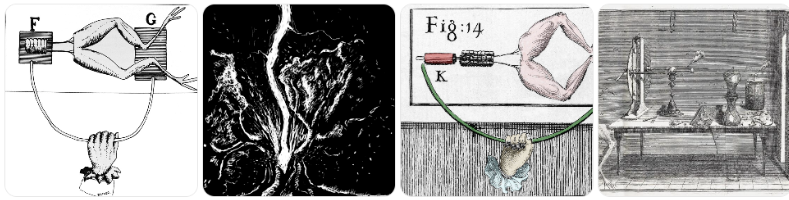
Here, the visual reinforces the connection between lightning, electricity, and Victor’s scientific obsession.
Autonomy and Moral Agency Across Texts
Jane Eyre’s declarations of independence appear throughout my CPB. In CPB #4, her famous assertion “I am no bird; and no net ensnares me: I am a free human being with an independent will”—became the foundation for connecting the novel to real historical women who faced barriers but acted with similar courage.
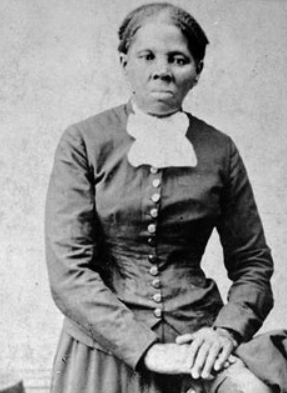
These figures echo Jane’s defiance and reinforce my focus on autonomy and integrity.
My entries on Dracula also emphasize autonomy, particularly Mina’s struggle as she becomes psychologically entangled with Dracula’s influence.
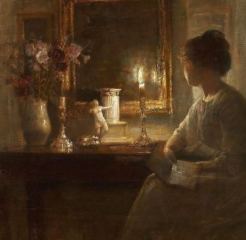
Jonathan describes one moment of her slipping identity: “She looked at me in a strange, puzzled way…” a detail that reflects the era’s anxieties about moral contamination.
Three Defining CPB Entries
A few entries best represent my overall reading identity. The first is the Jane Eyre entry featuring her insistence on equality “equal—as we are!” which I paired with historical accounts of women’s activism.
The second is my Jekyll and Hyde entry, where I explored the “primitive duality of man” and connected it to Victorian debates about criminal insanity and the limits of legal responsibility.
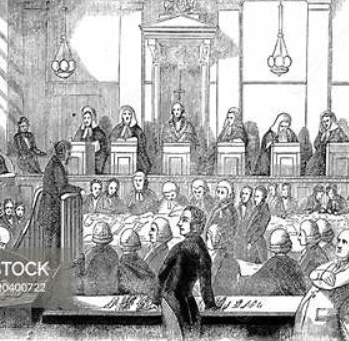
The courtroom image visually strengthens the comparison between Hyde’s transformation and real courtroom struggles over mental state and culpability.
The final defining entry is my analysis of Lucy Westenra’s mysterious illness, whose symptoms “paleness, faintness… weaker each morning” mirror historical accounts from the 1889–90 Russian Flu pandemic.
“paleness, faintness… weaker each morning”
— Dracula (Stoker)
These entries show how I use history to deepen my interpretations of fear, vulnerability, and public anxiety.
The CPB’s Impact on My Reading
Keeping a commonplace book changed my reading process. I paused more often, asked more questions, and looked outward to cultural contexts. When Victor encounters the blasted tree, I didn’t only appreciate the imagery; I asked what it meant for his moral responsibility. When Dorian realizes “It was his beauty that had ruined him,” I connected that idea to historical scandals around secrecy and image-making.
My QCQs fed into this reflection process. The questions I raised about Mina’s corruption, Jekyll’s moral responsibility, or Dorian’s obsession with appearances became the foundation for deeper research in my CPB entries. The QCQs served as seeds, and the CPB allowed them to grow into fully developed analyses.
Future Directions and Intellectual Identity
Looking ahead, the themes that emerged in my CPB suggest clear avenues for future research, including Victorian science, gender roles, and imperial anxieties.
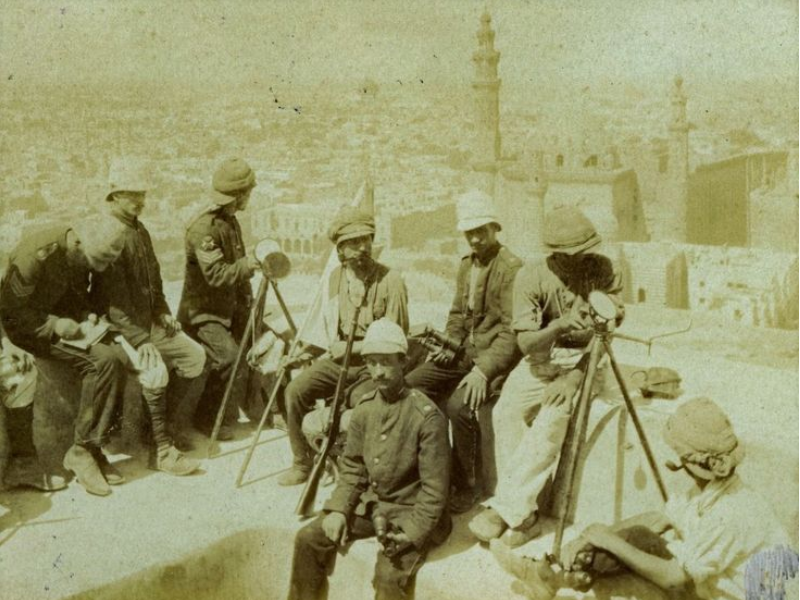
This image works well in the section discussing imperialism and future research possibilities.
Ultimately, my commonplace book serves precisely the purpose Standage describes it reveals who I am as a reader. The passages I selected, the historical frameworks I explored, and the questions I asked all point toward a reader interested in the intersections of literature, culture, power, and ethics. My CPB is more than a record, it is a portrait of my intellectual identity.
Works Cited
Brontë, Charlotte. Jane Eyre. 1847.
Shelley, Mary. Frankenstein. 1818 ed.
Stevenson, Robert Louis. The Strange Case of Dr. Jekyll and Mr. Hyde. 1886.
Stoker, Bram. Dracula. 1897.
Wilde, Oscar. The Picture of Dorian Gray. 1890.
“Elizabeth Blackwell.” Britannica.
“Harriet Tubman.” National Park Service.
“Charlotte Brontë.” Wikipedia.
“Cleveland Street Scandal.” British Library.
“Oscar Wilde: The Trials of 1895.” BBC History.
General summaries of:
— Luigi Galvani’s experiments
— M’Naghten Rules (19th-century criminal insanity)
— 1889–90 Russian Flu pandemic
— 1885 “White Slavery” panic (W. T. Stead)
