Passage:
“It was his beauty that had ruined him, his beauty and the youth that he had prayed for. But for those two things, his life might have been free from stain of evil.”
(Wilde, 1890)
Interpretation:
In the final chapters, Dorian finally realizes that the beauty and youth he once valued above all else have become his curse. He’s lived his life chasing pleasure, hiding behind charm and appearances while his soul—represented by the portrait—grows more twisted. Wilde uses Dorian’s story to show how obsession with image and reputation can destroy a person’s true self.
Historical Connection:
During the late Victorian era (1880s–1890s), society cared deeply about appearances and moral reputation, often hiding the truth behind closed doors. Wealthy and powerful people tried to maintain an image of respectability while engaging in secret vices or scandals.
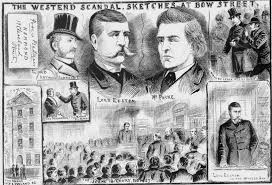
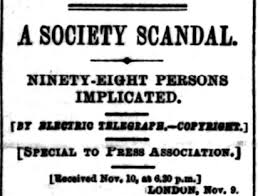
One striking example was the Cleveland Street Scandal (1889) in London, where a male brothel was discovered involving upper-class men—even rumored members of the royal circle. The government worked to cover it up to protect their reputations. This event reflected the same double life Wilde shows in Dorian—public decency versus private corruption. Ironically, Wilde himself was caught in a similar situation just a few years later, when he was put on trial for “gross indecency” in 1895.
Reflection:
This part of the book feels like Wilde was warning people about the danger of living a lie. Dorian’s beauty protects him from judgment, just like high social status protected many Victorians. But the truth always comes out in the end—whether through a painting, a scandal, or a public downfall. It makes you think about how much people today still care about “looking good” instead of being good.
Works Cited:
- Wilde, Oscar. The Picture of Dorian Gray. Lippincott’s Monthly Magazine, 1890.
- Cook, Matt. “The Cleveland Street Scandal.” British Library, 2016.
- “Oscar Wilde: The Trials of 1895.” BBC History, 2014.

Leave a Reply