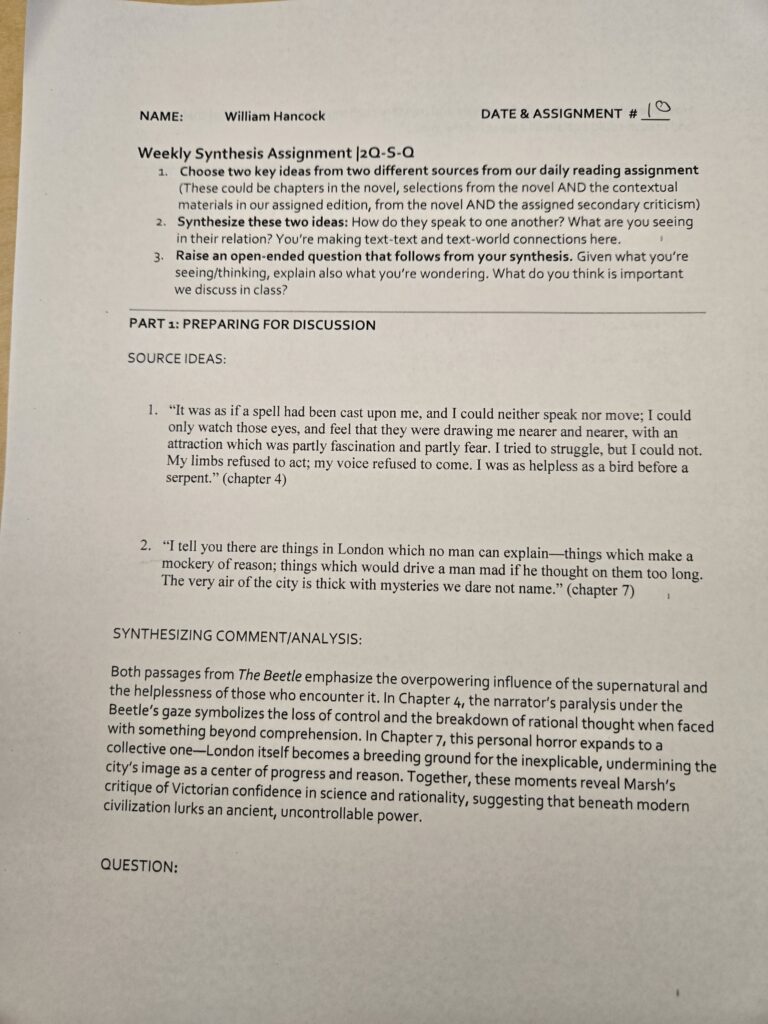
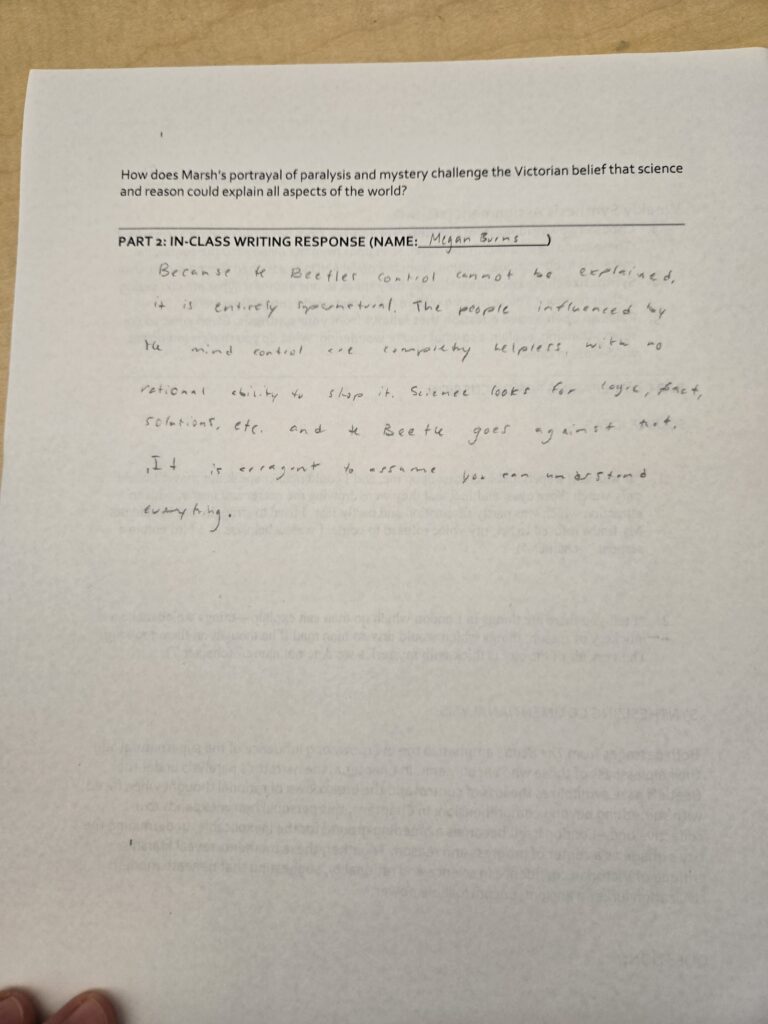
Step into the shadowy streets of Victorian London with Richard Marsh’s The Beetle, a chilling tale of mystery, obsession, and the supernatural. Published the same year as Bram Stoker’s Dracula, this novel captivated readers with its suspenseful plot, multiple narrators, and eerie, shape-shifting antagonist known only as “the Beetle.”
The Beetle weaves together themes of power, identity, and fear, blending horror, romance, and crime in a story that still unsettles modern readers. It’s a masterclass in Victorian Gothic storytelling and a hidden gem for anyone intrigued by the darker side of human—and inhuman—nature.
Whether you’re a horror aficionado, a fan of Gothic literature, or just curious about Victorian London’s mysteries, The Beetle promises a thrilling, unnerving journey you won’t forget.
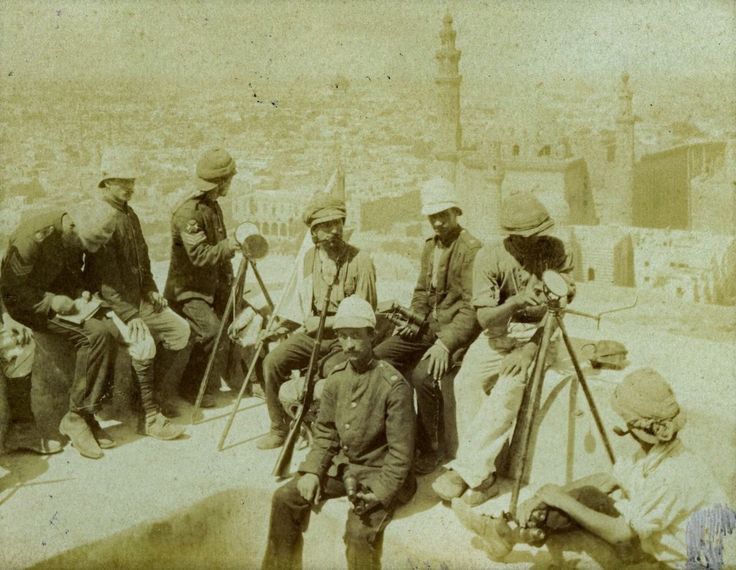
In late-Victorian Britain, anxieties surrounding empire, gender, and identity were reflected in literature that blurred the lines between science, superstition, and morality. Richard Marsh’s The Beetle: A Mystery (1897) embodies these tensions through its depiction of an Egyptian shape-shifting antagonist who uses hypnosis and transformation to control others. The novel appeared during Britain’s occupation of Egypt (beginning in 1882), when public fascination with Egyptology and fear of the “foreign other” were at their height. Scholars have linked Marsh’s story to the era’s imperial unease—its fear that the colonized might “invade” the colonizer’s body and mind.
Marsh’s personal history also adds a real-world dimension: before writing The Beetle, he served a prison sentence for forgery and later changed his name from Richard Heldmann to escape his criminal past. His fascination with disguise, duality, and guilt parallels broader Victorian debates about morality, criminal identity, and social respectability. Published the same year as Dracula, The Beetle explores similar anxieties about foreign influence, hypnosis, and moral corruption. Together, these themes capture the late 19th century’s struggle to define the boundaries between civilization and savagery, science and superstition, self and other—issues that reflected both Britain’s imperial identity and its moral uncertainties at the turn of the century.
“British troops in Cairo, 1882, marking the beginning of the British occupation of Egypt, which inspired a wave of late-Victorian fiction exploring imperial anxiety and the allure of the exotic.”
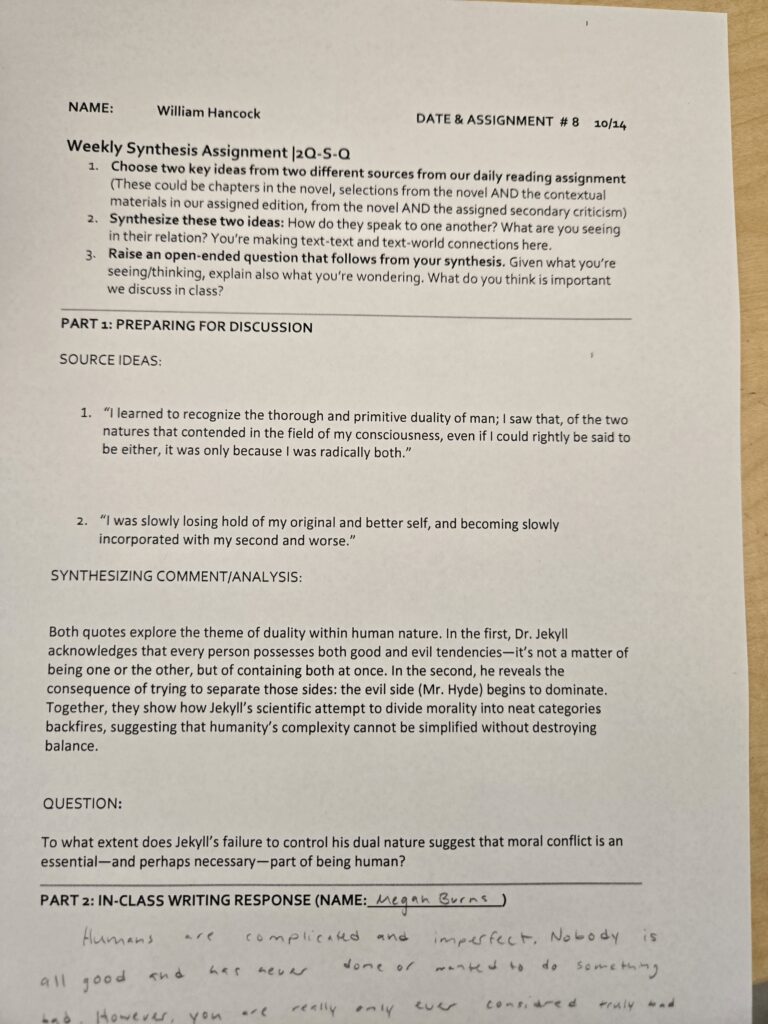
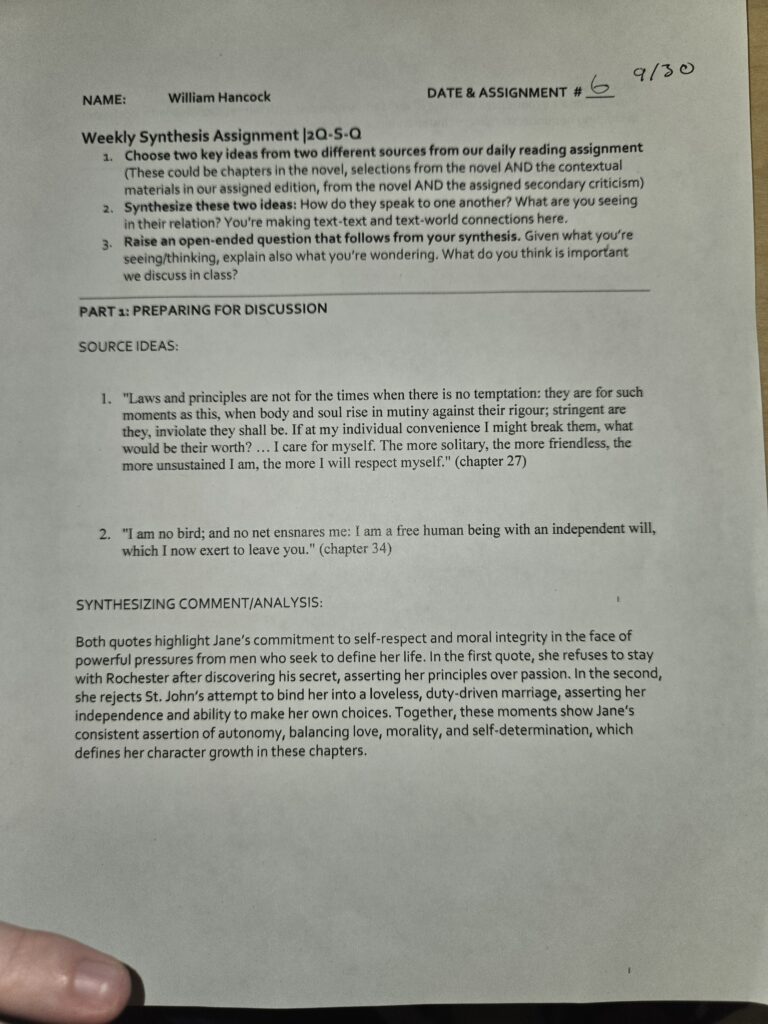
NAME: William Hancock DATE & ASSIGNMENT # ____
Weekly Synthesis Assignment |2Q-S-Q
PART 1: PREPARING FOR DISCUSSION
SOURCE IDEAS:
SYNTHESIZING COMMENT/ANALYSIS:
These two passages frame Dorian’s entire moral journey. In the first, Lord Henry plants the seed of aesthetic hedonism, suggesting that denying temptation harms the soul. In the second, Dorian reaps the consequences of embracing that doctrine fully, finding freedom from guilt but also surrendering his humanity. Together, they illustrate how Wilde uses temptation and beauty as vehicles to explore corruption, influence, and the illusion of moral immunity. The evolution from idea to embodiment reveals the destructive potential of philosophies divorced from empathy and responsibility.
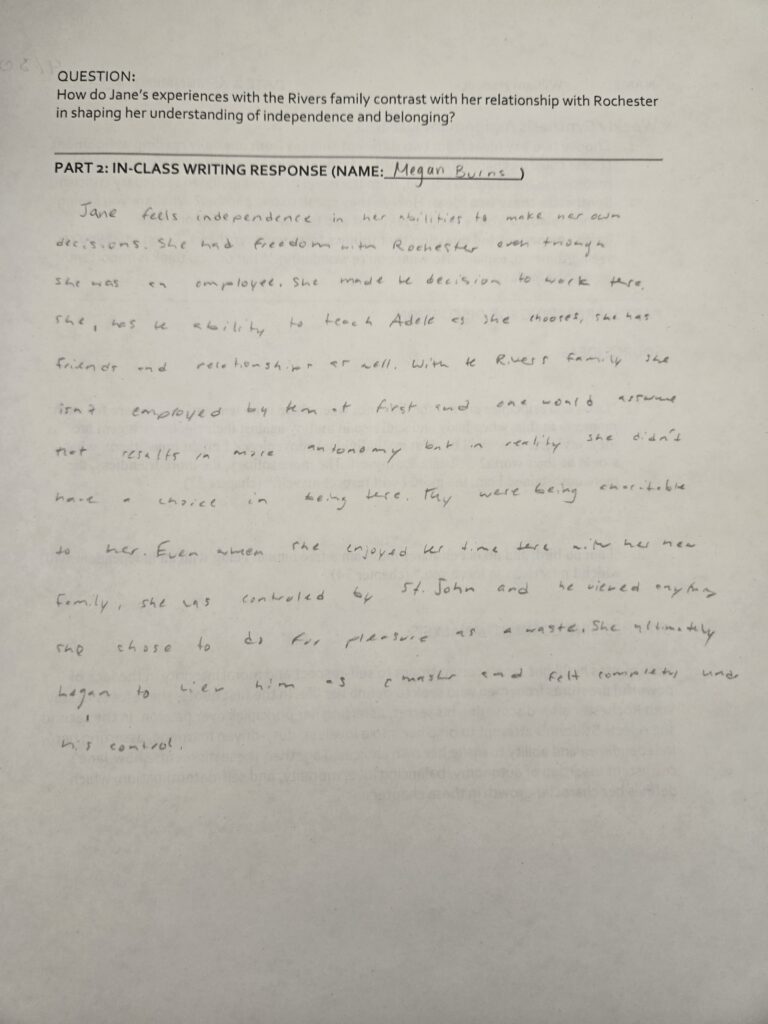
QUESTION:
How does Wilde use the transformation of Dorian’s beliefs—from Lord Henry’s seductive philosophy to his own lived experience—to critique the allure and consequences of living for beauty and pleasure alone?
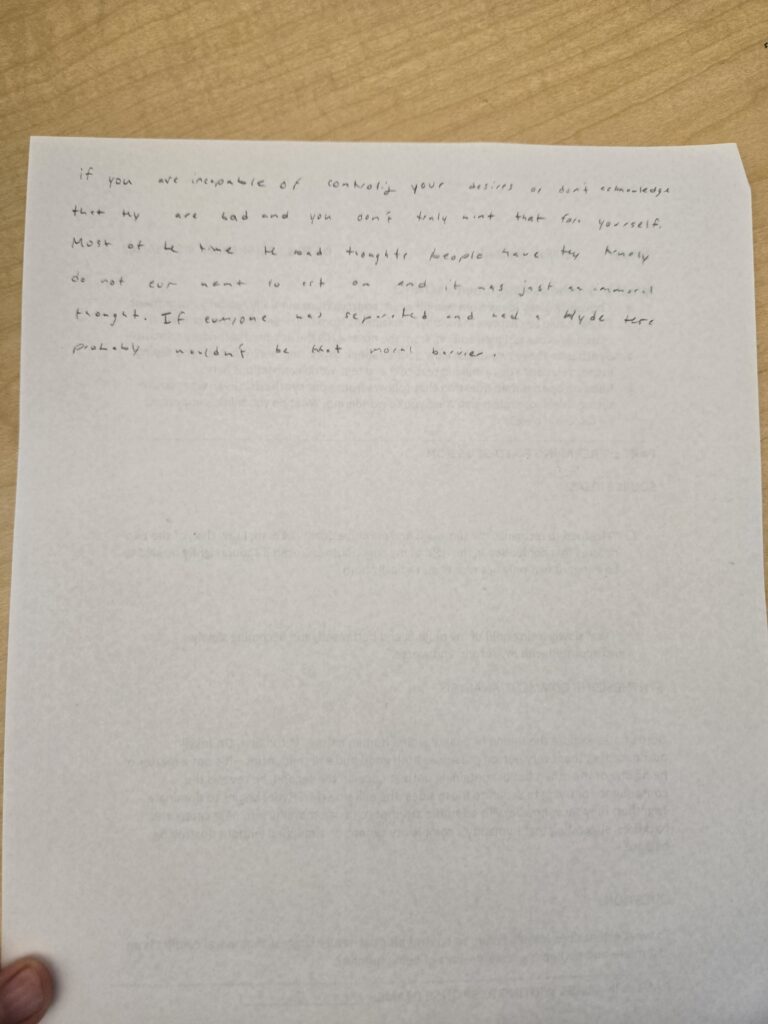
Part 2: In-class Writing Response (NAME:__________________)
The Picture of Dorian Gray tells the story of a young man, Dorian, who wishes that a painted portrait of himself would age instead of him. As Dorian stays youthful and beautiful, the portrait becomes more hideous with every immoral act he commits. The novel explores the relationship between beauty, morality, and the soul, and how obsession with pleasure and appearance can lead to corruption and self-destruction.
Passage:
“It was his beauty that had ruined him, his beauty and the youth that he had prayed for. But for those two things, his life might have been free from stain of evil.”
(Wilde, 1890)
Interpretation:
In the final chapters, Dorian finally realizes that the beauty and youth he once valued above all else have become his curse. He’s lived his life chasing pleasure, hiding behind charm and appearances while his soul—represented by the portrait—grows more twisted. Wilde uses Dorian’s story to show how obsession with image and reputation can destroy a person’s true self.
Historical Connection:
During the late Victorian era (1880s–1890s), society cared deeply about appearances and moral reputation, often hiding the truth behind closed doors. Wealthy and powerful people tried to maintain an image of respectability while engaging in secret vices or scandals.
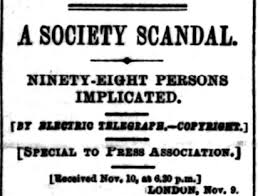
One striking example was the Cleveland Street Scandal (1889) in London, where a male brothel was discovered involving upper-class men—even rumored members of the royal circle. The government worked to cover it up to protect their reputations. This event reflected the same double life Wilde shows in Dorian—public decency versus private corruption. Ironically, Wilde himself was caught in a similar situation just a few years later, when he was put on trial for “gross indecency” in 1895.
Reflection:
This part of the book feels like Wilde was warning people about the danger of living a lie. Dorian’s beauty protects him from judgment, just like high social status protected many Victorians. But the truth always comes out in the end—whether through a painting, a scandal, or a public downfall. It makes you think about how much people today still care about “looking good” instead of being good.
Works Cited:
Published in 1886, The Strange Case of Dr. Jekyll and Mr. Hyde by Robert Louis Stevenson is a timeless exploration of the duality of human nature. Set in Victorian London—a society obsessed with respectability, morality, and reputation—the novella delves into the conflict between good and evil that exists within every person. Through the contrasting characters of the respectable Dr. Henry Jekyll and his monstrous alter ego, Edward Hyde, Stevenson examines how repression, temptation, and the desire for freedom can drive individuals to dangerous extremes. Blending elements of mystery, horror, and psychological insight, the story challenges readers to consider the darker aspects of identity and the consequences of denying one’s true self.
In late-Victorian England, courts, doctors, and philosophers were debating whether people who committed crimes under mental disturbance could truly be held responsible. The M’Naghten Rules (1843) established that legal insanity depended on whether the accused “knew right from wrong,” but new psychiatric theories complicated this simple test. As Nicola Lacey explains, Stevenson’s Jekyll and Hyde captures that uncertainty: Dr. Jekyll’s attempt to separate his good and evil selves mirrors society’s effort to distinguish sanity from insanity, morality from criminality. Meanwhile, Jessica Cook situates the story in Victorian medical thought about addiction and compulsion, arguing that Jekyll’s “potion” represents an early exploration of behavioral addiction—the loss of self-control over destructive desires. In chapters 5–10, when Jekyll finds he can no longer control his transformations into Hyde, Stevenson dramatizes the moment when moral weakness becomes a medical or psychological problem. The novel therefore reflects real 19th-century debates about criminal insanity, psychological responsibility, and the medicalization of deviant behavior, anticipating modern understandings of mental illness and addiction.
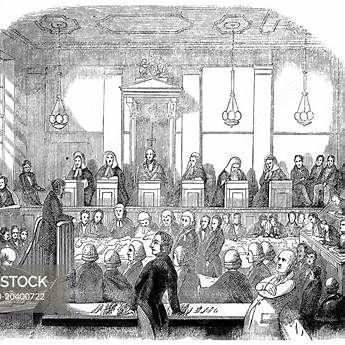
“Courtroom sketch from the Old Bailey during the trial of M’Naghten (1848), a pivotal case in English law’s treatment of insanity.”
© 2026 William Hancock
Theme by Anders Noren — Up ↑
